

Electrical systems in North American buildings consist primarily of insulated conductors, protective enclosures, and the various devices used to access electricity at the point of use. The overall design of these systems is fairly consistent between houses, apartments, and commercial spaces, and most components are long-lived and rarely handled after installation. As with modern plumbing and HVAC systems, however, many of the materials used contain plastic, particularly in insulation, sheathing, and user-facing devices.
Conductors and insulation
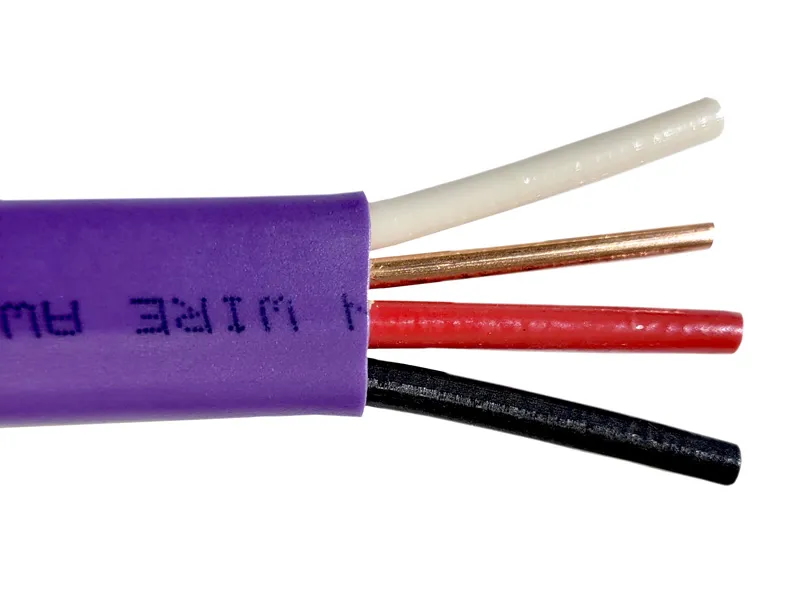
Typical NM-B cable used in residential construction
The wiring inside walls is made of metal conductors encased in plastic insulation. In homes, the most common product is a bundled cable containing several copper wires, each insulated with a thermoplastic coating and then wrapped together in a plastic outer jacket. This outer jacket is usually PVC. In larger buildings, individual insulated wires are often run separately inside metal conduit.
Large runs that carry power from one part of a building to another sometimes use aluminum instead of copper, especially when very thick conductors are needed. These aluminum cables are also insulated with plastic materials. Uninsulated overhead power lines outside buildings are usually bare aluminum or aluminum-steel composites, but once inside a structure the conductors almost always have plastic insulation.
In present-day construction, there are no cases where un-insulated wires are used in electrical systems.
Boxes, enclosures, fittings, and conduit

Conduit, also known as electrical metallic tubing (EMT)
The infrastructure that protects wiring consists largely of metal components. Inside walls, conductors terminate in junction boxes made from stamped steel or, in some homes, from molded plastic. Commercial buildings tend to use steel boxes almost exclusively. These boxes provide mechanical protection and a safe place to make connections.
When wiring is routed through empty tubes rather than bundled cable, the tubes are known generically as conduit. Most conduit found inside buildings is galvanized steel, especially in offices and other commercial environments. Rigid PVC conduit is also widely used, particularly underground, beneath slabs, or in corrosive environments where metal would deteriorate.
Cable trays, when present in larger buildings, are usually made from perforated steel or aluminum. Fittings, clamps, and other supports are overwhelmingly steel.
Overall, the protective hardware around electrical wiring is largely metal, with plastic appearing mainly in residential-grade boxes and in certain conduit types.
Panels, breakers, and distribution equipment

Residential electrical panel
Electrical panels distribute power to circuits throughout a building. The outer enclosure of a panel—what you see when the door is opened—is almost always made of steel. Inside are metal bus bars, steel mounting frames, and switches (called breakers) that control each circuit. Breakers contain internal metal parts along with plastic casings, since the mechanism must be electrically insulated and heat-resistant. There are currently no all-metal alternatives for these components because the insulating function is essential.
In larger buildings, distribution equipment follows the same pattern: steel housings, metal bus structures, and plastic-containing breakers or switches inside.
Grounding and bonding hardware

Electrical grounding uses metal components to direct stray current safely into the earth. The most familiar items are ground rods, which are long steel rods coated with copper and driven into soil near the building. Inside, grounding conductors are bare copper or insulated copper wires; when insulated, the coating is plastic. Metal water piping, if present, is often incorporated into grounding paths using bronze or brass clamps.
Bonding jumpers, grounding screws, and other grounding hardware are generally made from solid metals such as copper, brass, or steel. These parts are fully metallic, durable, and do not involve plastic apart from optional insulation on certain wires.
Switches, outlets, and interface hardware

Standard residential light switch
The components people interact with most—light switches, wall outlets, dimmers, and cover plates—contain a mix of metal and plastic. The internal electrical contacts are typically brass or copper alloys, while the housings and rocker or toggle mechanisms are made from molded plastic. Cover plates are commonly plastic as well, although metal versions (steel, aluminum, brass) remain widely available and easy to source.
For those trying to reduce plastic exposure, switches and outlets present one of the simplest intervention points. Metal cover plates are standard products, inexpensive, and durable. Entirely metal or ceramic switch and outlet bodies exist in the specialty and architectural hardware markets, though they are less common and usually more costly.
These user-facing components represent the majority of touch surfaces in an electrical system, and swapping them is far more practical than attempting to remove plastic from wiring or breaker assemblies.
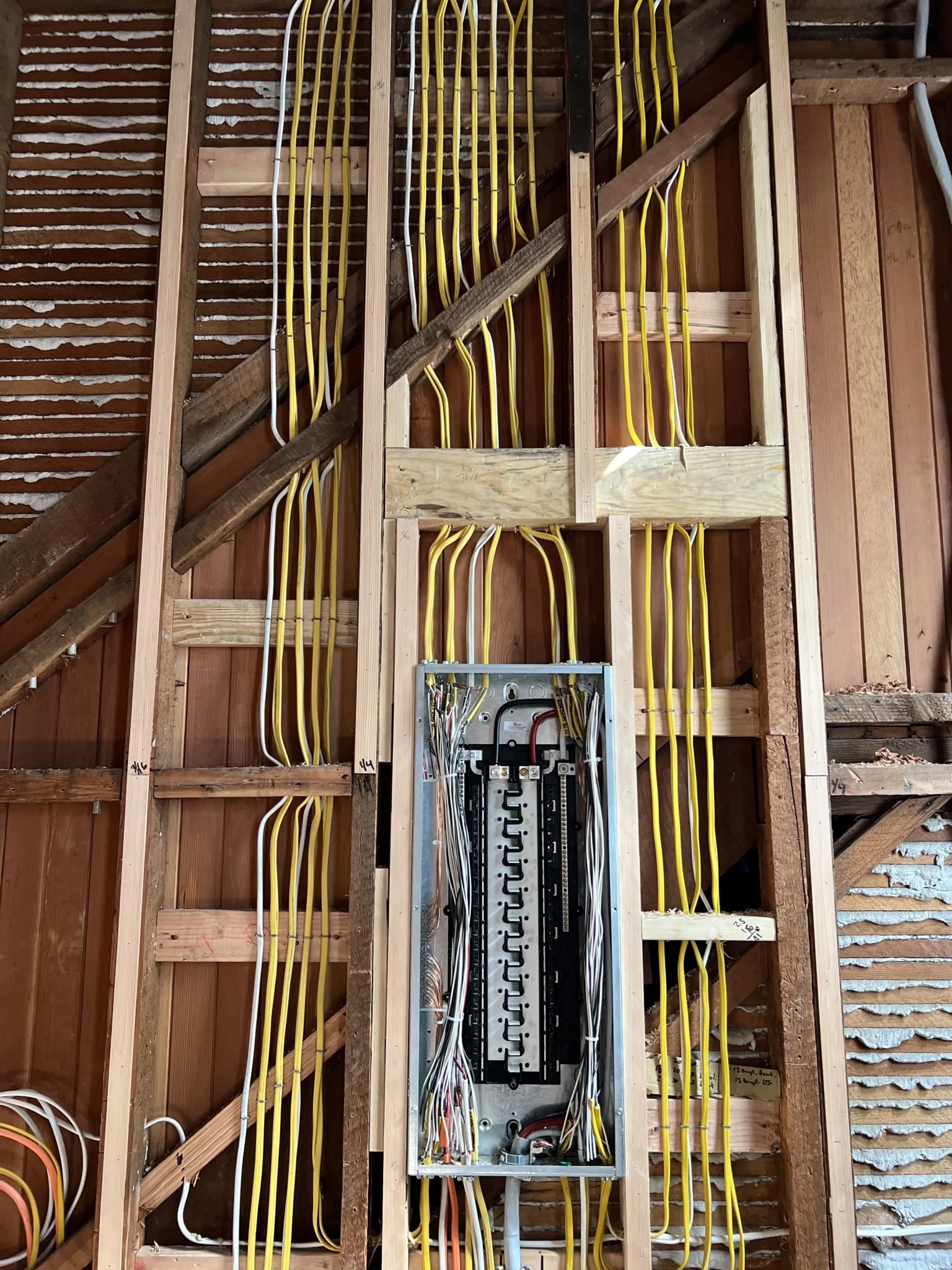
Electrical wiring installed between studs