
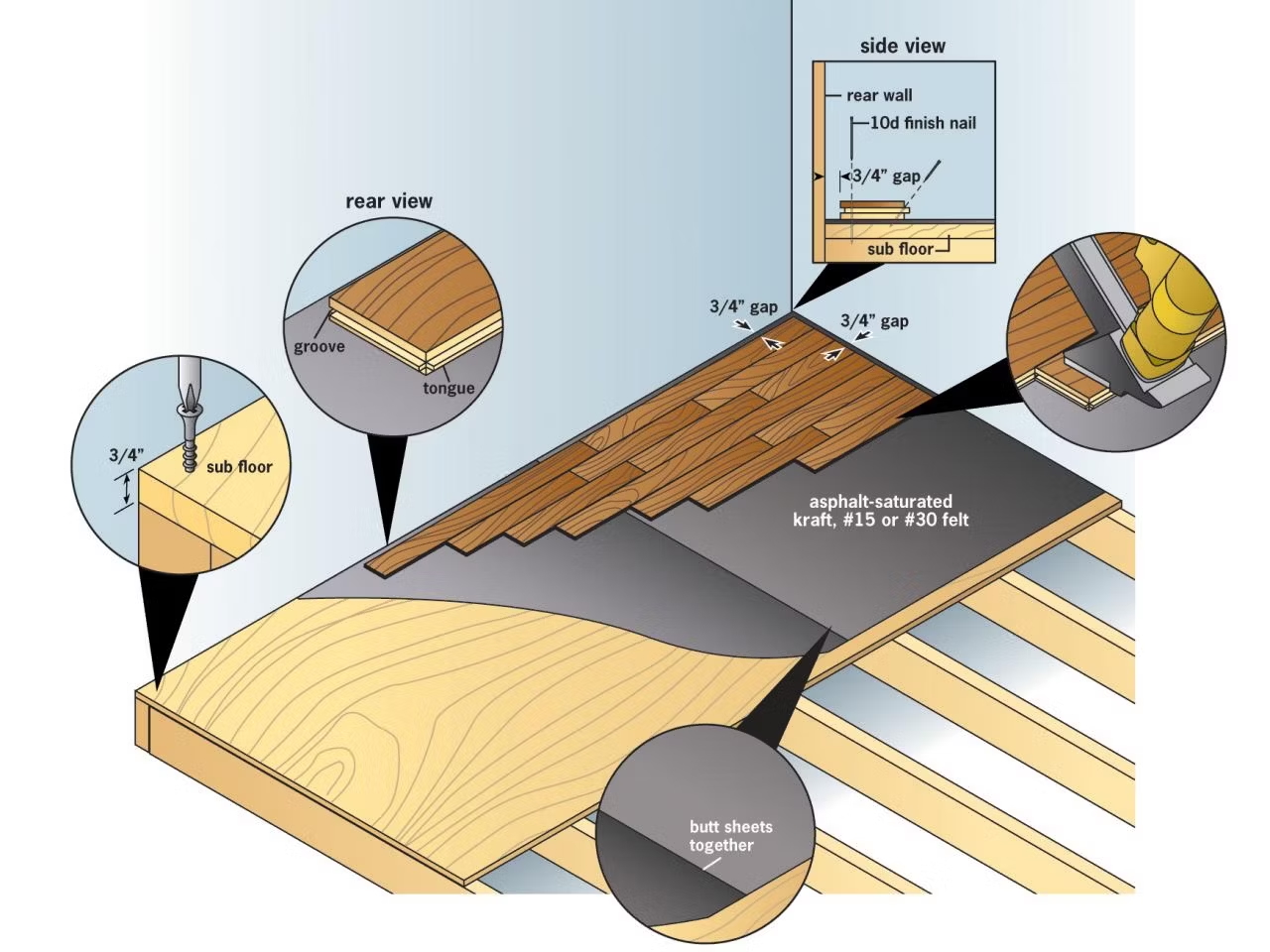
Flooring is the surface layer installed over a building’s subfloor. Systems vary by material and method, and may include additional components such as underlayments, adhesives, grout, or finishes. Modern flooring often incorporates plastics in multiple forms, but traditional materials and techniques remain viable for zero-plastic construction.
Concrete flooring
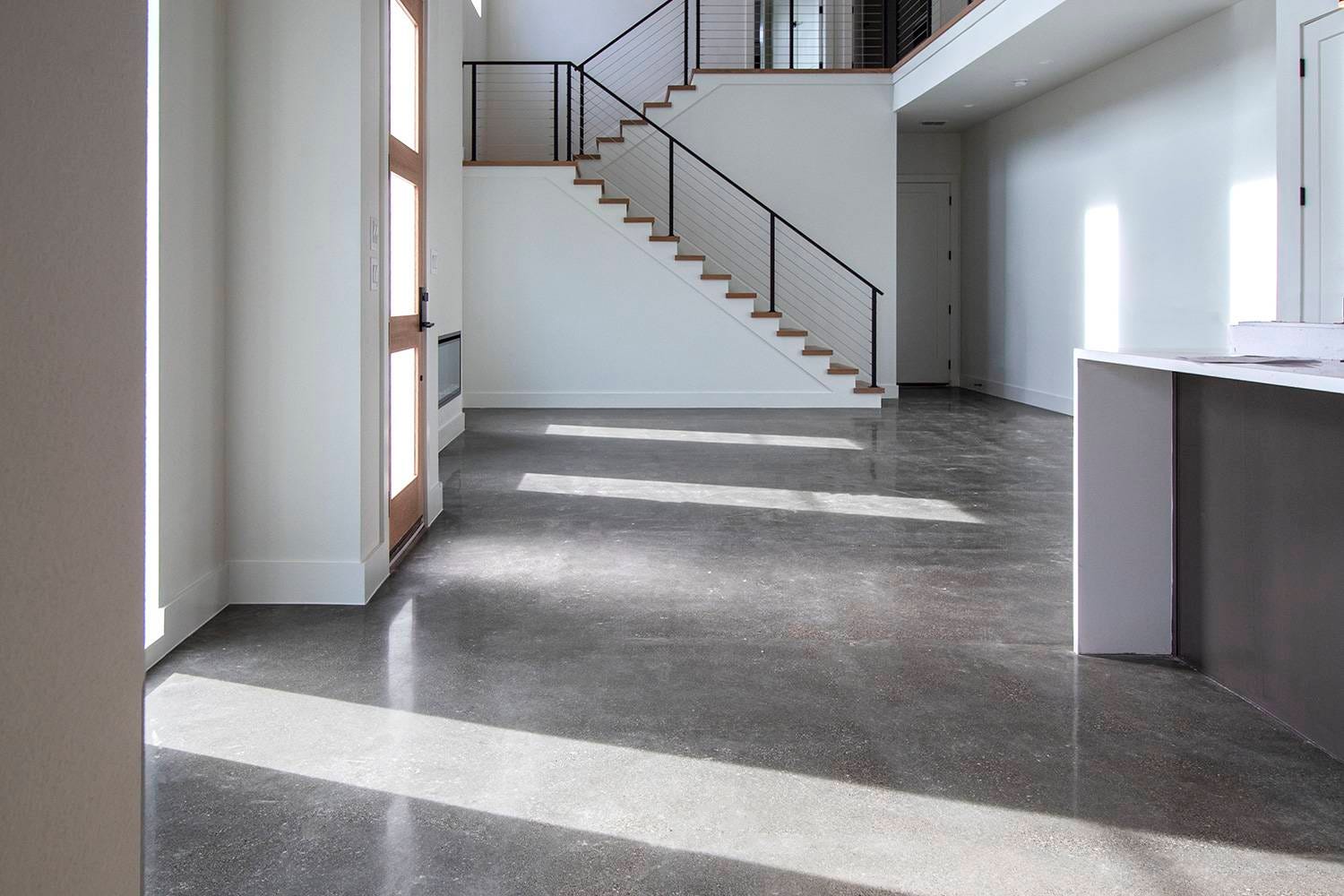
Concrete floors installed in a residence
Concrete flooring involves pouring a slab of concrete onto the subfloor. Standard indoor applications in the U.S. require a plastic vapor barrier under the slab, per building code, to prevent moisture migration from the ground. [1] Concrete floors are often coated with epoxy after installation. In structural slabs for high-rises, post-tensioned tendons are used and encased in plastic sheaths, which allow tensioning after the concrete has cured. These sheaths currently have no non-plastic equivalent. For zero-plastic applications, concrete is best used in outdoor or unconditioned spaces, reinforced with steel rather than polymer fibers.
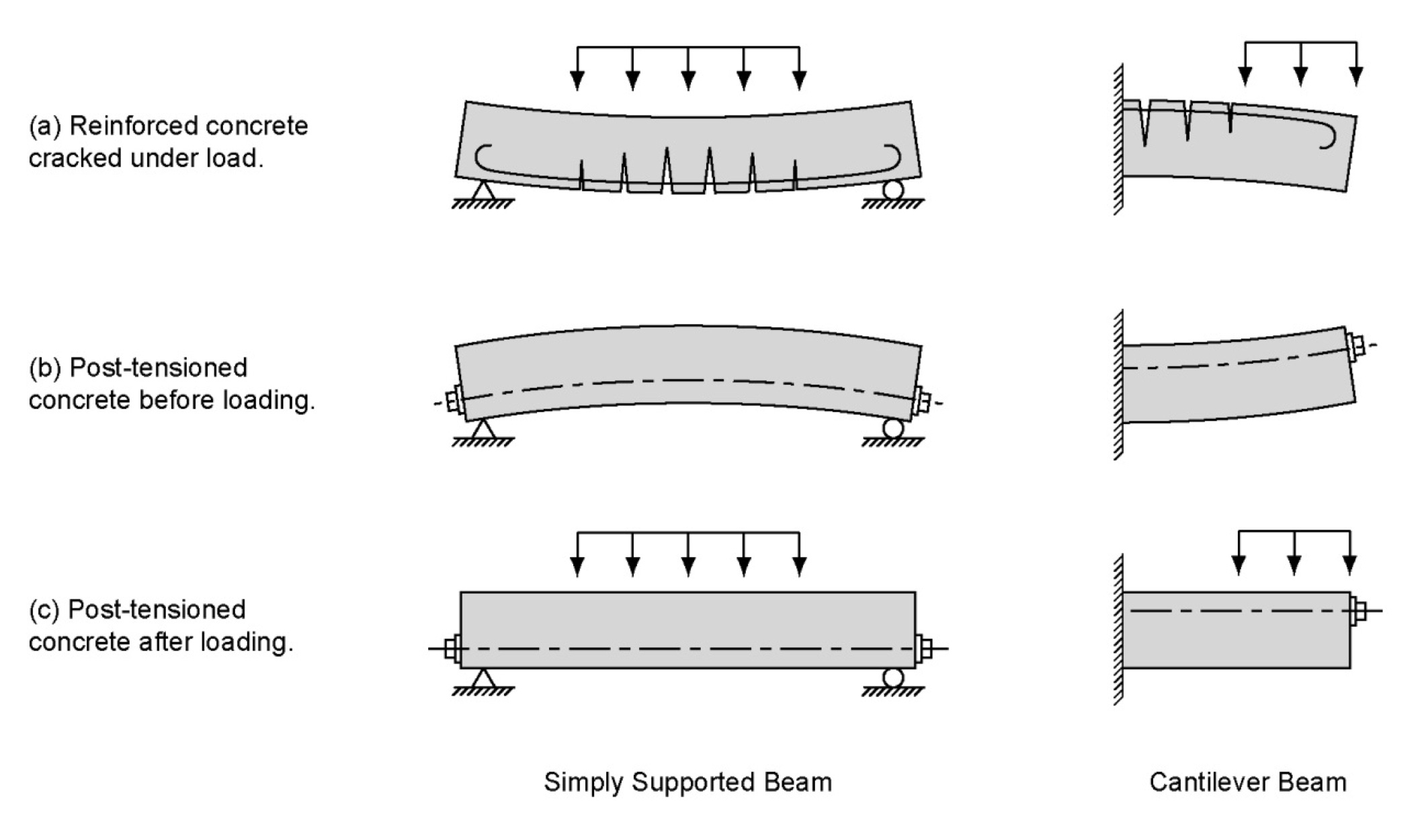
Diagram showing the role of post-tensioning in structural concrete flooring
Linoleum
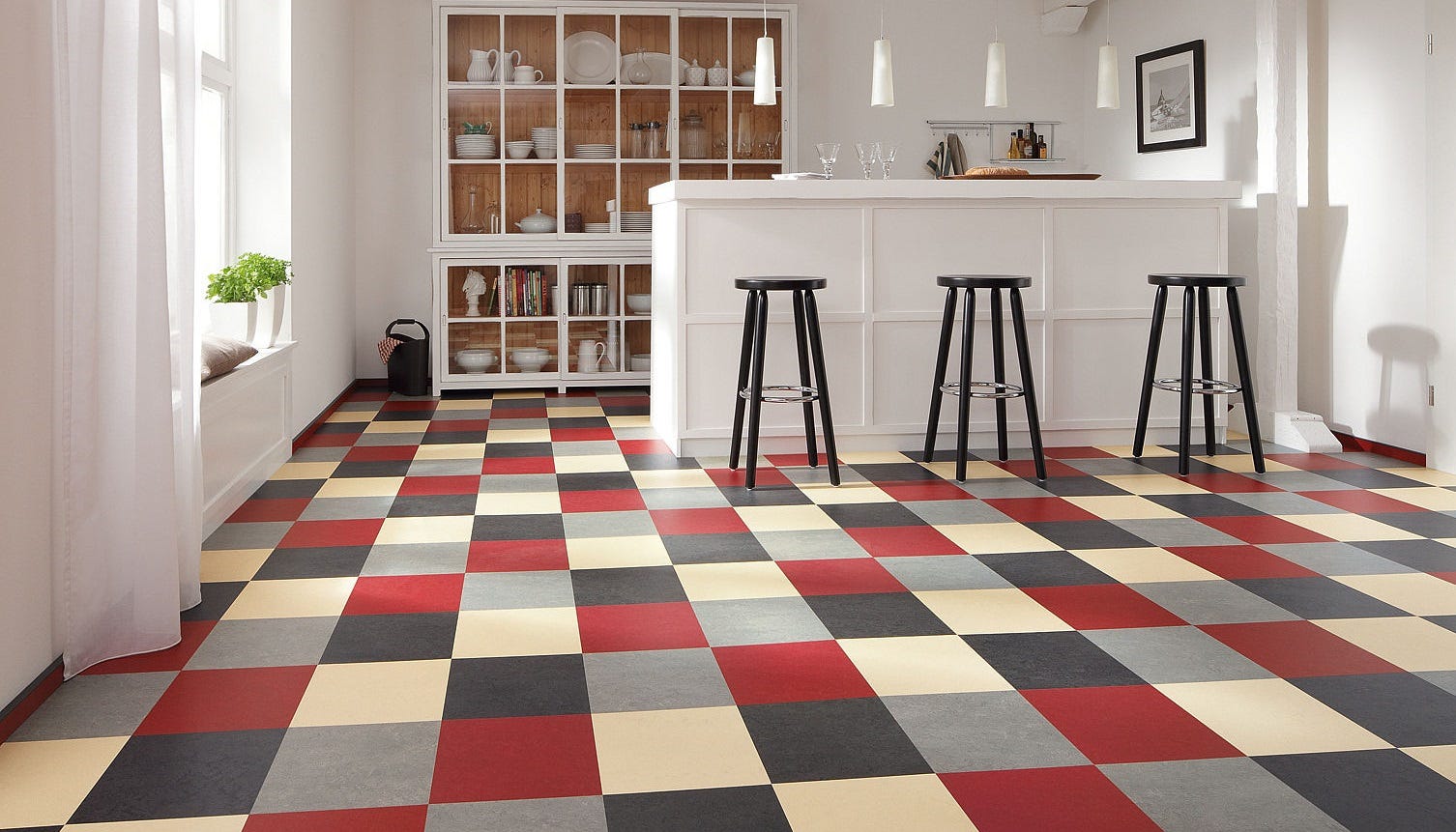
Decorative linoleum floor
Linoleum is a resilient sheet flooring made from oxidized linseed oil, pine rosin, wood or cork flour, limestone fillers, and mineral pigments, all pressed onto a jute or canvas backing. It contains no synthetic binders and is considered fully biodegradable. Linoleum is suitable for both residential and commercial use, and may be installed over wood or concrete subfloors. Building codes do not mandate underlayment for linoleum, though cushioning or moisture barriers may be specified in some installations. These can be omitted or substituted with natural alternatives if necessary.
Tile (Ceramic and Porcelain)

Tile floor
Tile flooring uses kiln-fired ceramic or porcelain pieces adhered to a subfloor using mortar and finished with grout. Tile may be installed directly over concrete or over a cementitious backer board; [2] modern underlayments often use plastic membranes, but these are not code-mandated and can be avoided. Traditional thick-bed mortar methods allow fully mineral-based assemblies.
Stone
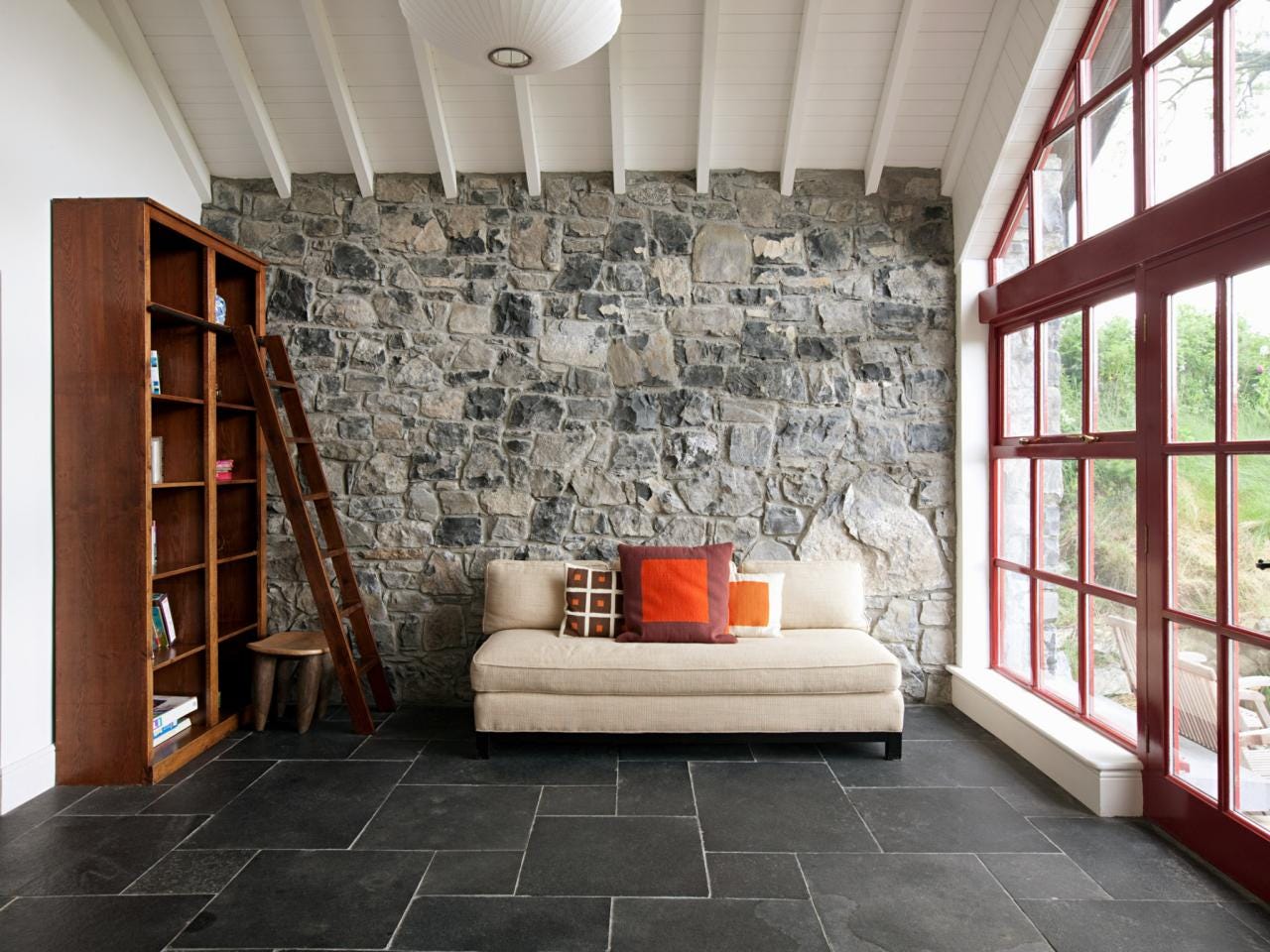
Slate floor
Stone flooring includes materials such as slate, marble, travertine, and granite, cut into tiles or slabs and installed using mortar and grout. Natural stone is inherently plastic-free. Installation over a stable subfloor is required; cement board or mortar beds are used as needed for leveling. Finishes may be applied to reduce porosity or improve stain resistance. Plastic-based finishes are common but avoidable; natural oil- and wax-based sealants are commercially available. No plastic underlayment is required or specified by code.
Hardwood
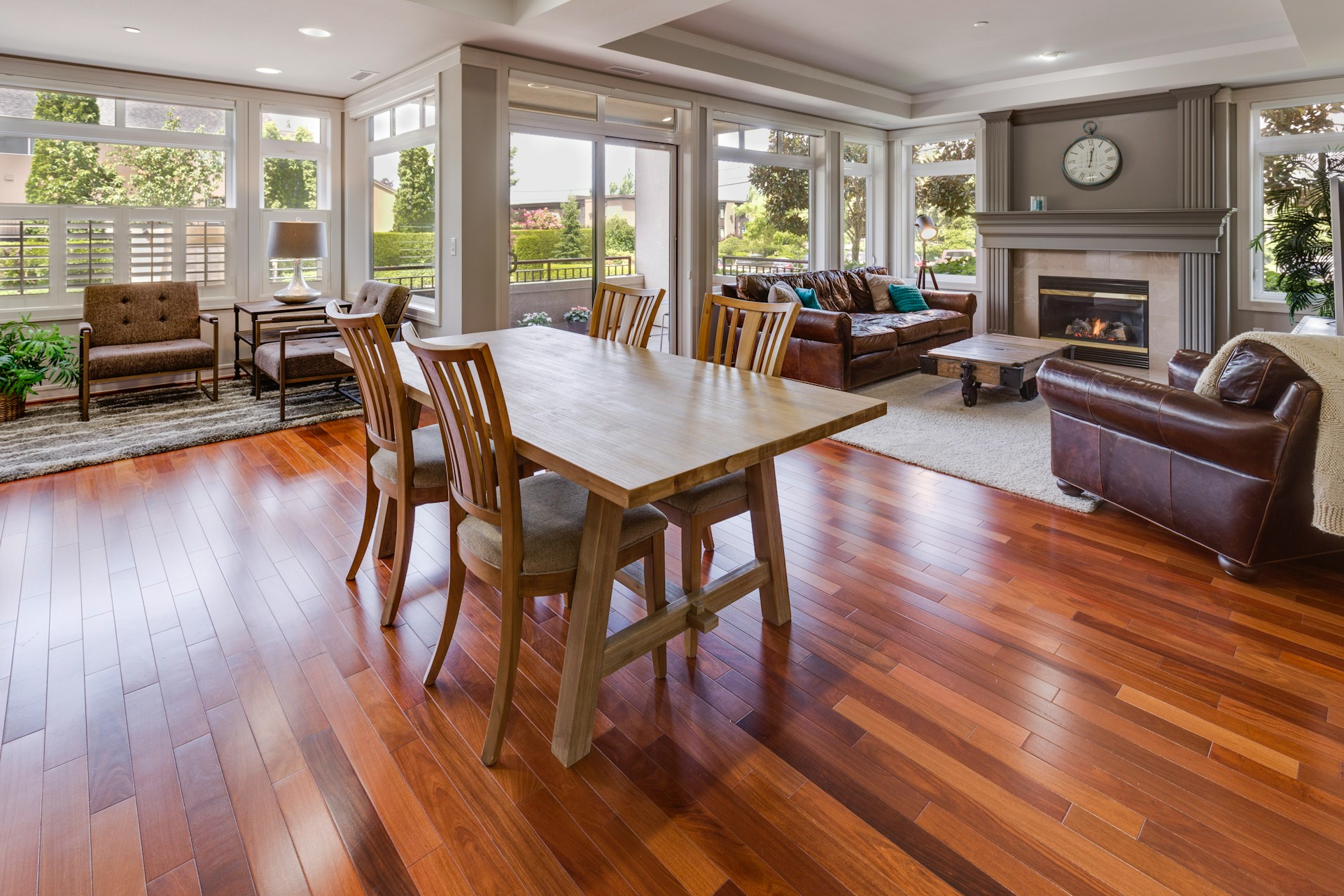
Hardwood floor
Hardwood flooring consists of either solid planks milled from lumber or engineered wood boards made from veneer over a composite core. Floating or nail-down installations are permitted over most subfloor types. Building code does not require underlayment, though a slip sheet or sound isolation layer is often included. Plastic-free installations can use paper or natural fiber layers instead.
Vinyl
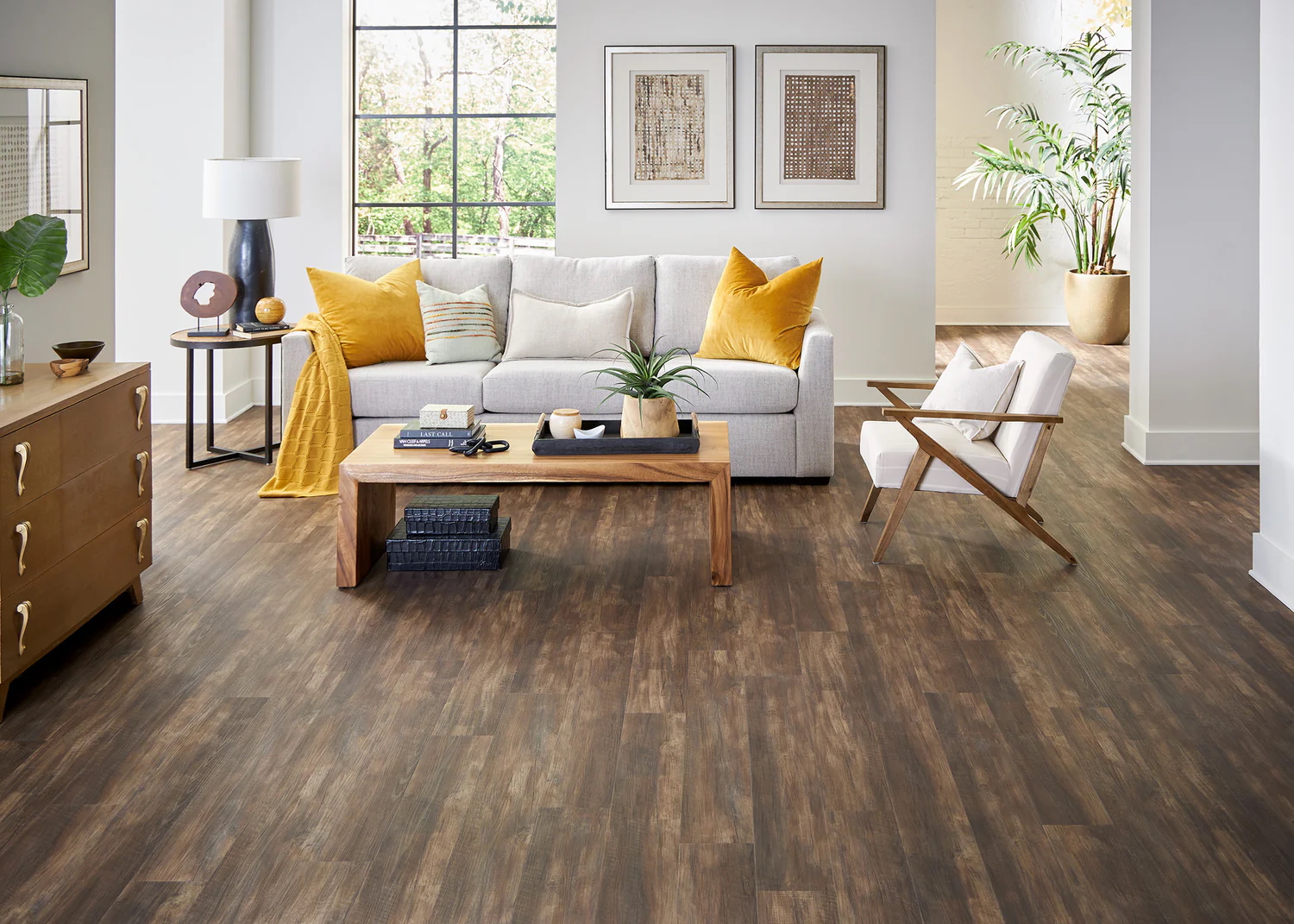
Vinyl floor designed to look like hardwood
Vinyl flooring is made entirely from polyvinyl chloride (PVC) and plasticizers. It is sold as sheets, tiles, or planks and bonded to the subfloor with adhesives. It can be difficult to distinguish visually between vinyl flooring types like “luxury vinyl plank” and real hardwood, as manufacturers design them to mimic natural materials. The system is inherently plastic and cannot be adapted for zero-plastic construction. Code does not require its use in any application.
Laminate
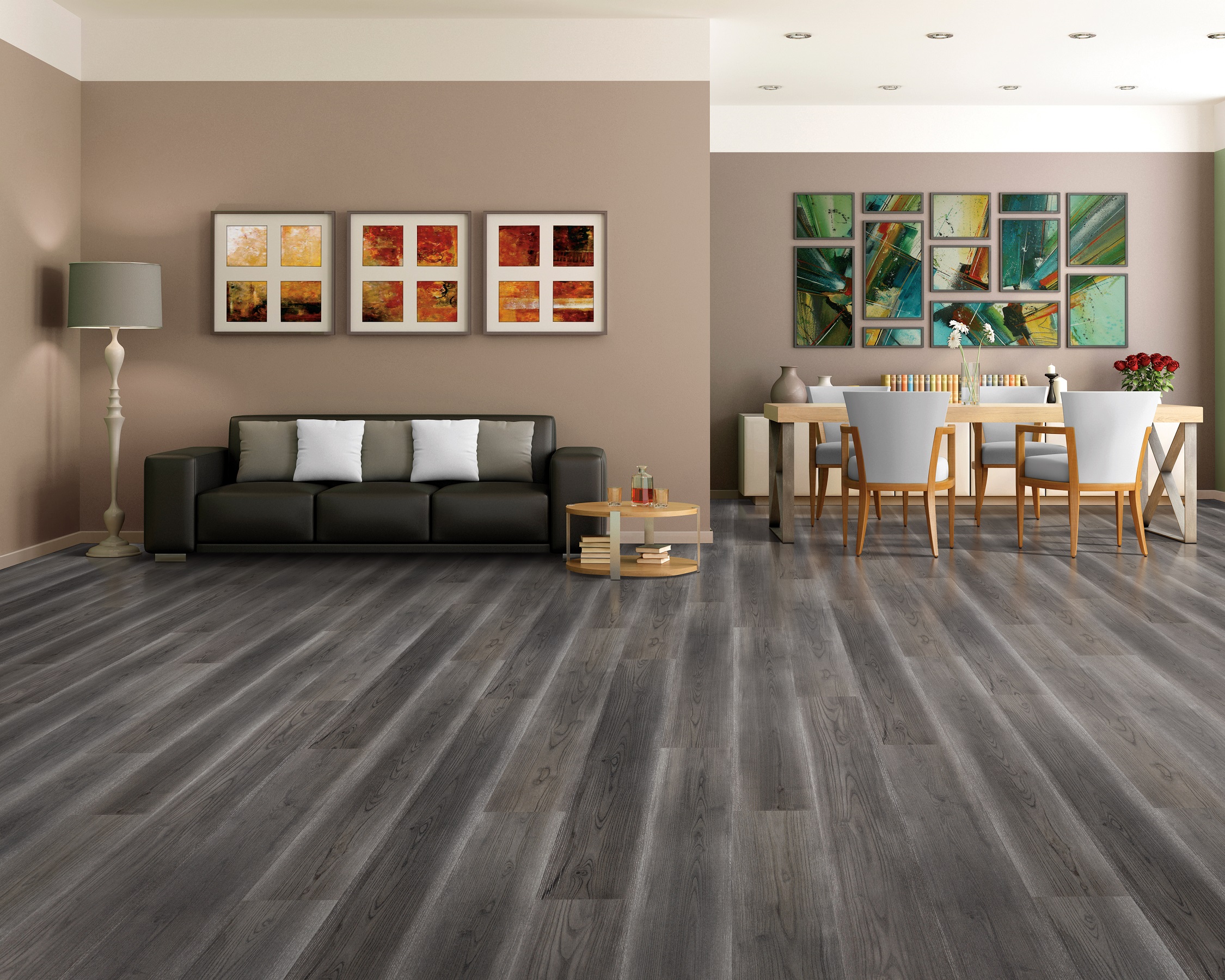
Laminate floor
Laminate flooring uses a printed decorative layer laminated to a fiberboard base with melamine resin and covered with a wear-resistant plastic topcoat. The full system includes thermoplastic adhesives and synthetic materials throughout. Underlayment is often required for leveling or sound reduction, typically made of foam or plastic film. Laminate flooring is entirely synthetic and not compatible with zero-plastic building goals.
Carpet
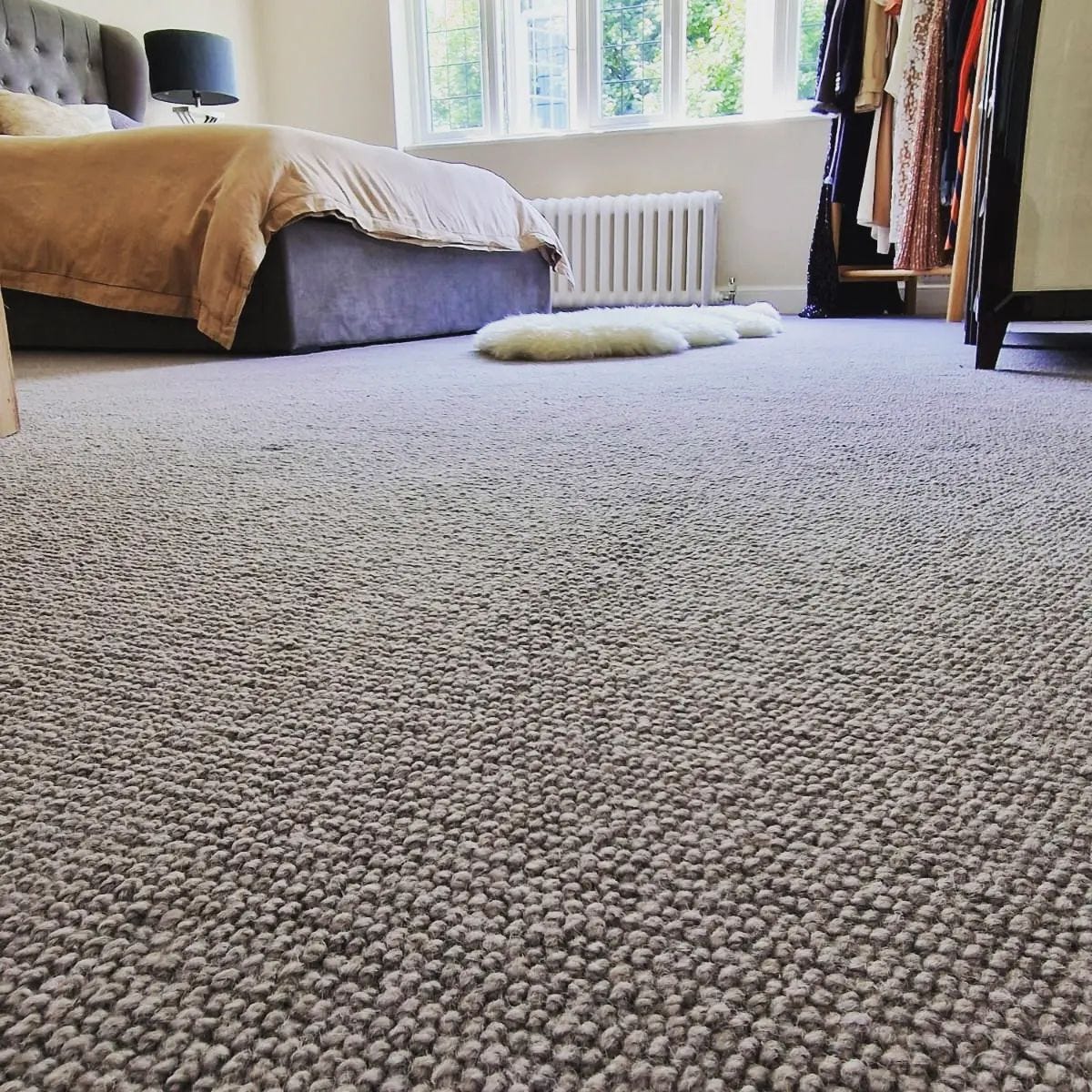
Carpeted floor
Carpet flooring consists of textile surface fibers (looped or cut) bonded to a backing layer, often installed over a cushion or pad. Most carpets are made from nylon, polyester, or polypropylene, and use synthetic adhesives and foam underlayments. Natural fiber carpets such as wool can be installed plastic-free using tack strips or natural adhesives. No building codes mandate the use of synthetic materials for carpet.
Best zero-plastic options
Viable plastic-free flooring options include solid hardwood, linoleum, natural stone, and traditional tile. Each must be paired with compatible non-plastic installation materials. While rare, zero-plastic carpeting is possible with currently-available materials. Site-cast concrete is usable in unconditioned spaces or with appropriate slab detailing. Engineered wood, laminate, and vinyl cannot be adapted for zero-plastic use.
References
- How to Pour a Concrete Living Room Floor (DIY), Odell Complete Concrete, 2020.
- When and How to Use Cement Backerboard, This Old House, 2024.