
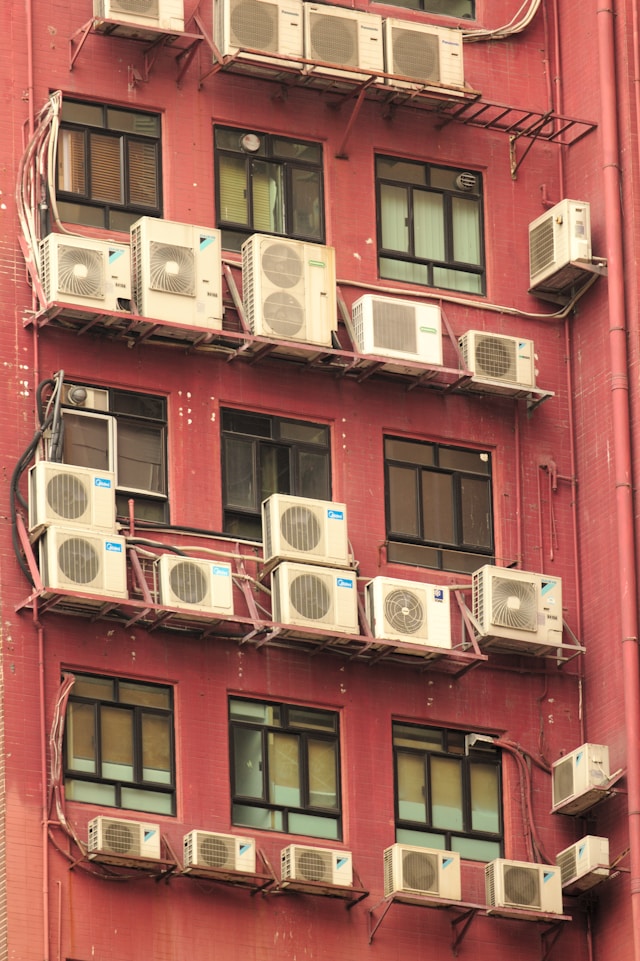
Heating, ventilation, and air-conditioning (HVAC) systems regulate temperature, humidity, and indoor air quality throughout a building. Although the equipment varies widely by climate and building type, the material palette is largely consistent: sheet metal for ducts, copper tubing for refrigerants, steel for furnaces and air handlers, aluminum in coils and fins, and several kinds of plastics in insulation, drain lines, and flexible ducting.
As with electrical and plumbing systems, HVAC components are long-lived and typically hidden from occupants once installed. Plastics appear mainly in insulation layers, condensate management, and specific forms of flexible ductwork.
Ductwork
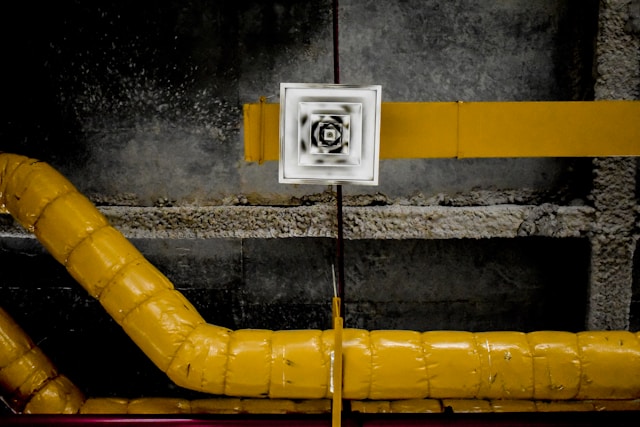
Sheet-metal ducts in a typical forced-air system
Most forced-air systems use rigid sheet-metal ducts made from galvanized steel. These ducts distribute conditioned air through the building and are joined with steel screws and sealed with mastic (water-based vinyl alcohol polymer sealant) or foil-backed tape. Metal ducts are durable, fully recyclable, and free of structural plastics.
Where ducts pass through unconditioned areas, they are commonly wrapped in fiberglass insulation. This insulation is clad in a vapor-barrier jacket made from foil-laminated plastic or polymer film.
Flexible duct, used especially in residential attics, introduces far more plastic. These ducts consist of a wire helix covered by a thin inner plastic liner (often polyethylene or polyester), surrounded by fiberglass insulation, and wrapped in a metalized plastic outer jacket. For durability and airflow performance, rigid metal ducts are generally preferred, with flex-duct reserved for short runs.
Air handlers, furnaces, and heat pumps
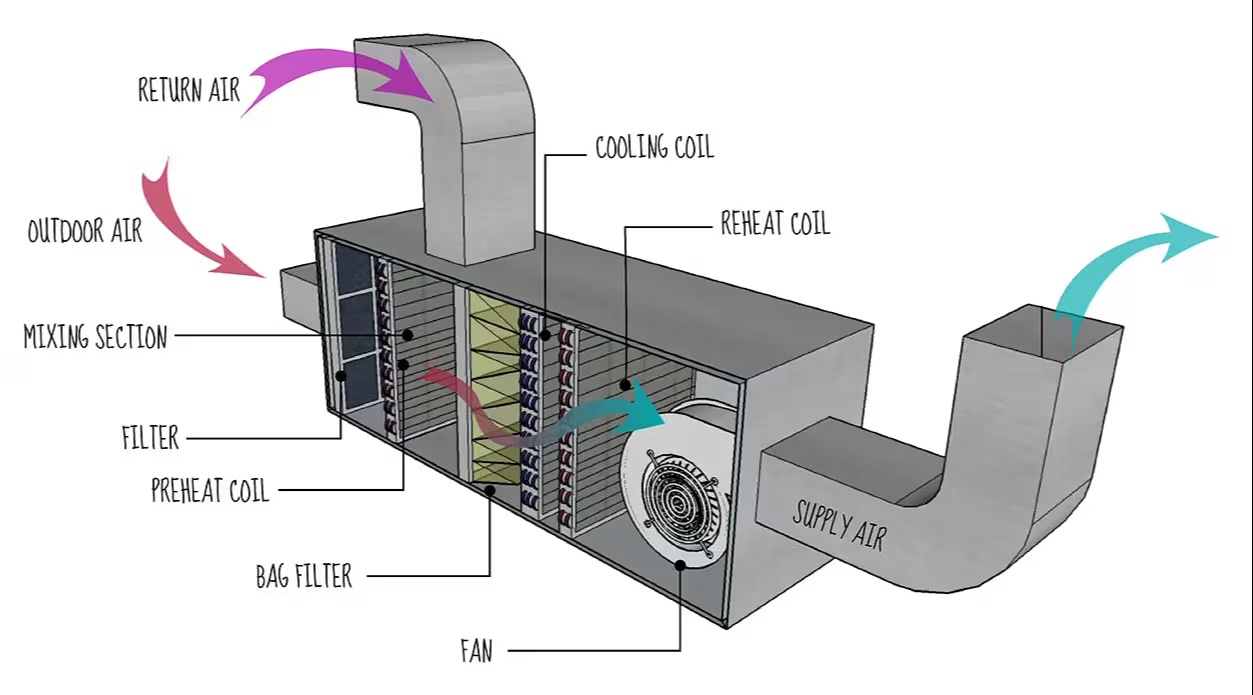
Indoor air handler with coil assembly
Heat pumps, air conditioners, air handlers, and furnaces, use a mixture of metal and plastic. Cabinets and housings are often sheet steel, and the blower wheel is typically steel or aluminum. Motors and control boards include plastic housings or insulating components, but their overall material footprint is primarily metal. aluminum finned coils, and internal plastic parts (such as fan blades and electrical insulation). Refrigerant handling components like compressors, valves, and accumulators, are overwhelmingly metal, as they must withstand pressure and heat. Copper refrigerant lines are almost always encased in elastomeric foam insulation to reduce heat gain and prevent condensation. This insulation is typically made from synthetic rubber or polyethylene foam.
Outdoor units use plastic fan shrouds and composite top covers; these are chosen for corrosion resistance and lighter weight.
Vents, registers, and diffusers
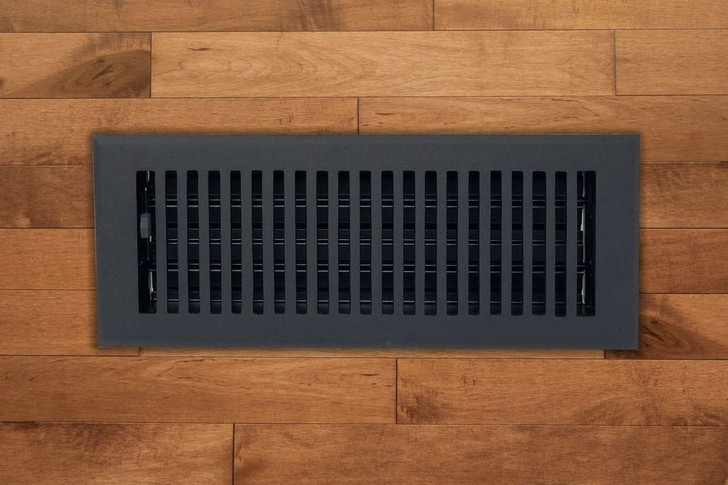
Floor register used in residential HVAC
The user-facing components, registers, grilles, and diffusers, are made from either metal or plastic. Metal options (steel or aluminum) are widely available, inexpensive, and significantly more durable. Plastic versions appear mostly in low-cost residential construction, especially for ceiling diffusers and return grilles.
Commercial systems tend to specify all-metal components for fire safety, mechanical longevity, and airflow performance. For those minimizing plastic exposure, replacing registers and grilles is straightforward and visually impactful.
Condensate drains and humidity control
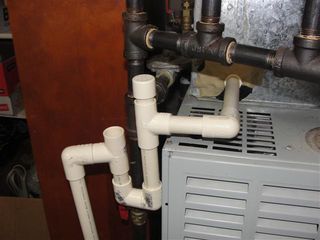
Condensate drain trap beneath an air handler
When air is cooled, moisture condenses on the indoor coil and must be drained away. Condensate lines are almost always made from PVC, CPVC, or (less commonly) flexible polyethylene tubing. These lines are the highest-plastic component in typical HVAC installations.
Pan assemblies beneath air handlers may include metal trays, but secondary drain pans, especially in attics, are often made from molded plastic. Float switches, pump housings, and sensor probes incorporate plastic parts for water resistance and electrical isolation.
Humidifiers and dehumidifiers use a mix of metal housings and plastic internal components due to moisture contact and corrosion constraints.
Controls, thermostats, and sensors

Modern digital thermostat
Thermostats, control boards, and sensors, like all electronics, use a significant proportion of plastic.
While the control hardware is small in mass relative to ductwork or refrigerant lines, it is one of the few HVAC components regularly handled by occupants. Mechanical vintage-style thermostats with metal housings exist, but most modern models rely on plastic casings and interfaces.