
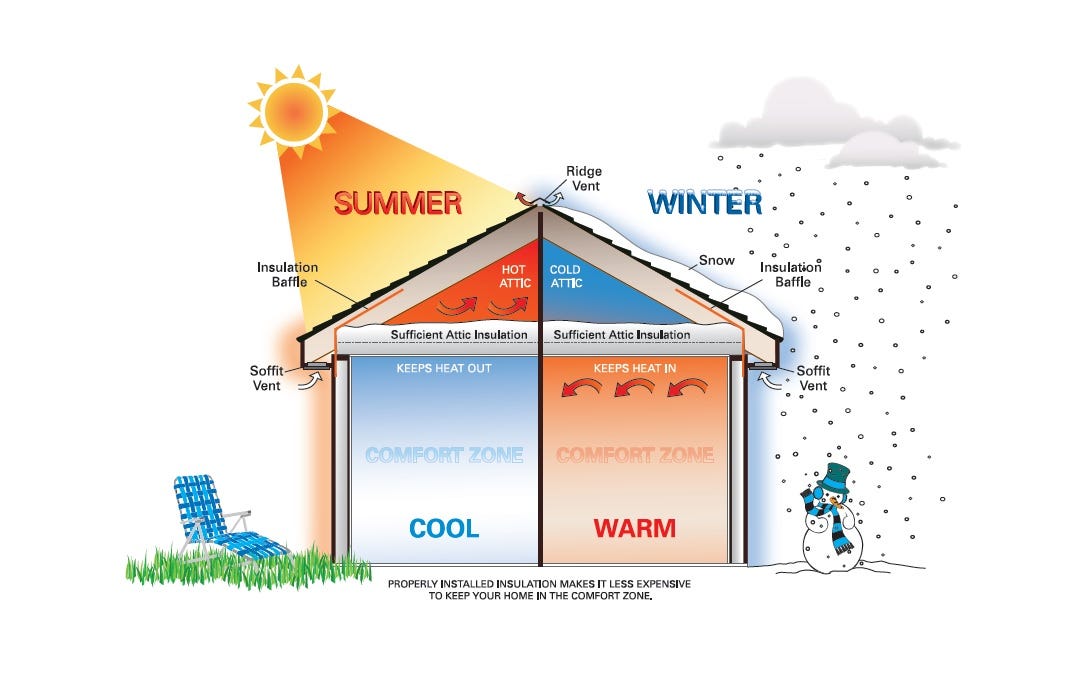
By mass, about a third of plastic produced in North America is used in construction; of this third, insulation accounts for between 20 and 25%. That makes insulation account for somewhere between 6.6% and 8.25% of all plastic. [1]
Insulating buildings is essential to maintaining appropriate temperature indoors, reducing energy waste from heating/cooling, soundproofing, and reducing vibrations. Frequently, insulation works by restricting airflow (which reduces ventilation). This can cause a tradeoff between indoor air quality and insulation, exacerbated by toxins and pollutants used in the construction of the building itself. Some of the “volatile organic compounds” (or VOCs) detected in indoor air are microplastics, plastic additives, and secondary pollutants carried in the insulation itself. [2] The ideal product insulates well, pollutes indoor air as little as possible, and is otherwise practical to buy, install, and maintain. Because plastic foams, fibers, and forms release microplastics and VOCs into the indoor environment, they don’t constitute an acceptable choice.
Plastic insulation materials can include fiberglass, polystyrene, polyiso, polyurethane, and phenol-formaldehyde.
Non-plastic insulation materials can include mineral wool, organic textiles (cotton, wool), wood products, and masonry materials.
Common insulation form factors:
Blanket
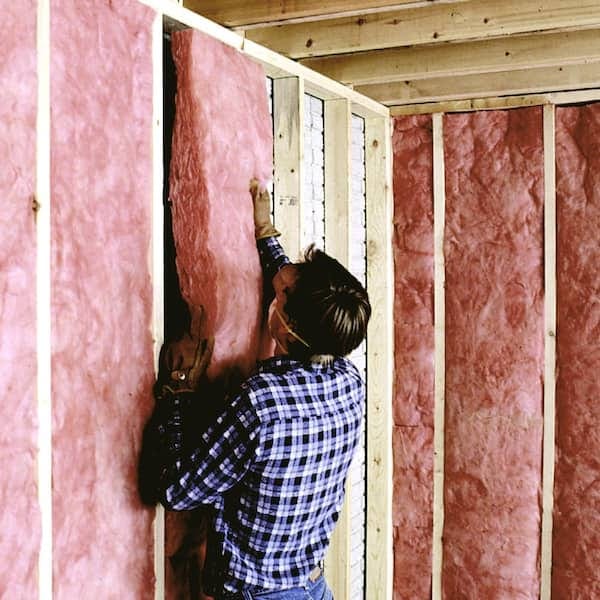
Blanket insulation
Consisting of batts and rolls of soft fibrous material, blanket insulation is a common form factor for use in insulating walls and surfaces. This is generally made of fiberglass or recycled polyethylene, both of which are plastic. Options made from mineral wool on the North American market always use plastic binders to hold the fibers in place.
For blanket insulation, there aren’t any options in the US market that satisfy the zero-plastic goal; that said, just switching from the pink stuff to mineral wool probably accomplishes >95% of the goal.
Concrete block
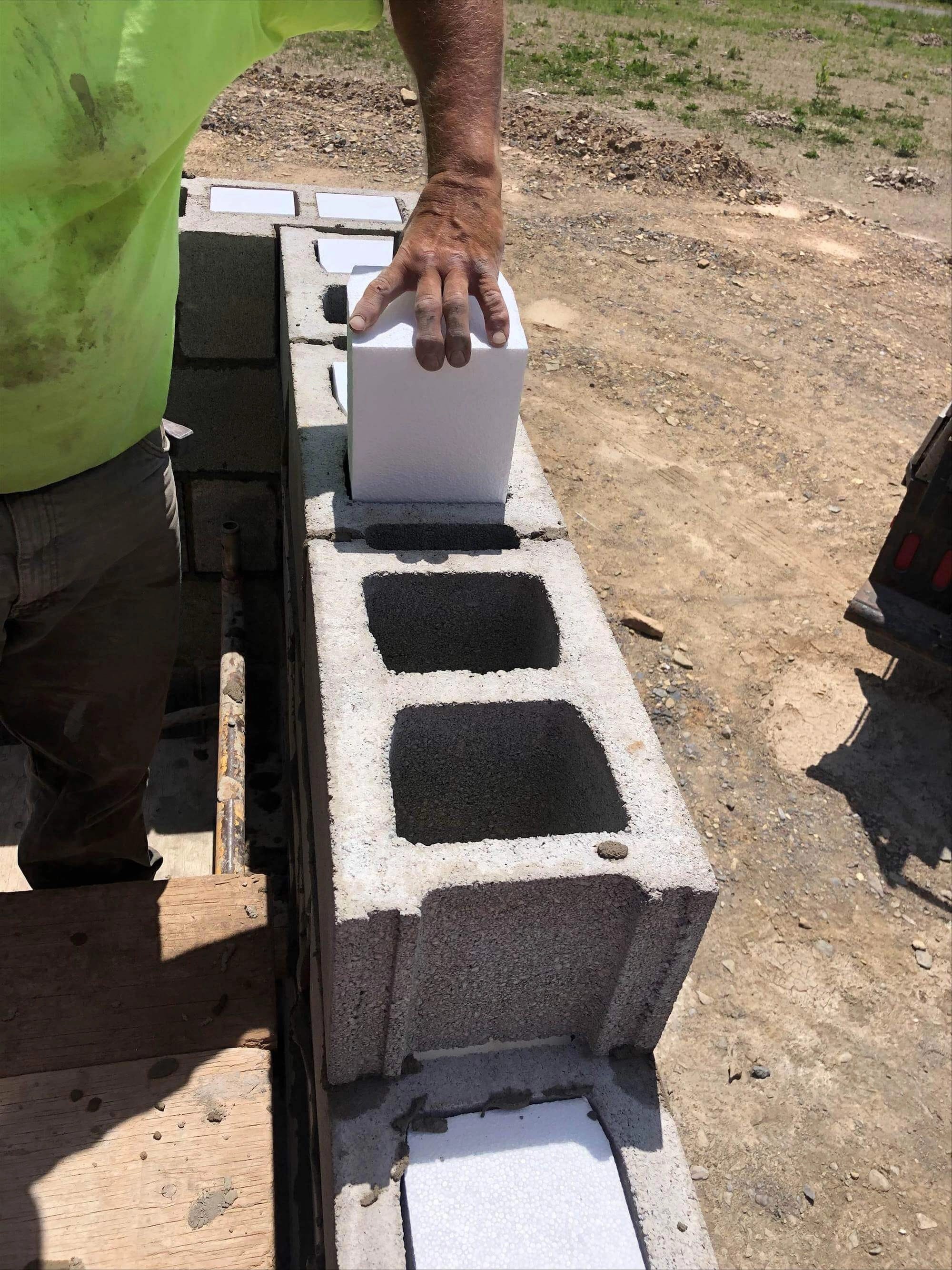
Concrete block insulation
Concrete block insulation usually refers to concrete blocks with a hollow cavity filled with an insulator. One version of this is polystyrene concrete block, which is saturated with polystyrene beads. Another version uses a chemical reaction to fill concrete with air pockets; this is called AAC (autoclaved aerated concrete) or ACC (autoclaved cellular concrete). Sometimes, hollow cavities are filled with loose-fill insulation, straw, or even wood chips.
Concrete-block insulation can be used in zero-plastic construction depending on the additives. As concrete alone isn’t a great insulator, concrete-block insulation depends upon additives being applied to gaps in the concrete to reduce its thermal conductivity. Concrete-block insulation using air, straw, or a zero-plastic cellulose as the insulating additive are a viable zero-plastic construction option.
Foam board
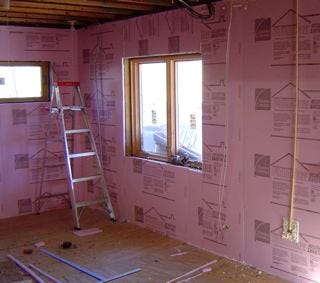
Foam board insulation
Foam boards are useful because they’re easy to store, handle, and install, and are more appropriate for unsupported and exterior insulation applications because they support their own weight without needing too much extra wall system. All foam board products on the market in North America are made of plastic. If an efficient manufacturing process could be devised, a zero-plastic competitor could take the form of thin wood veneer or kraft paper sheets, with cementitious foam or mineral wool sandwiched between them. As of now, zero-plastic construction with foam board insulation is not possible.
Loose fill and blown-in
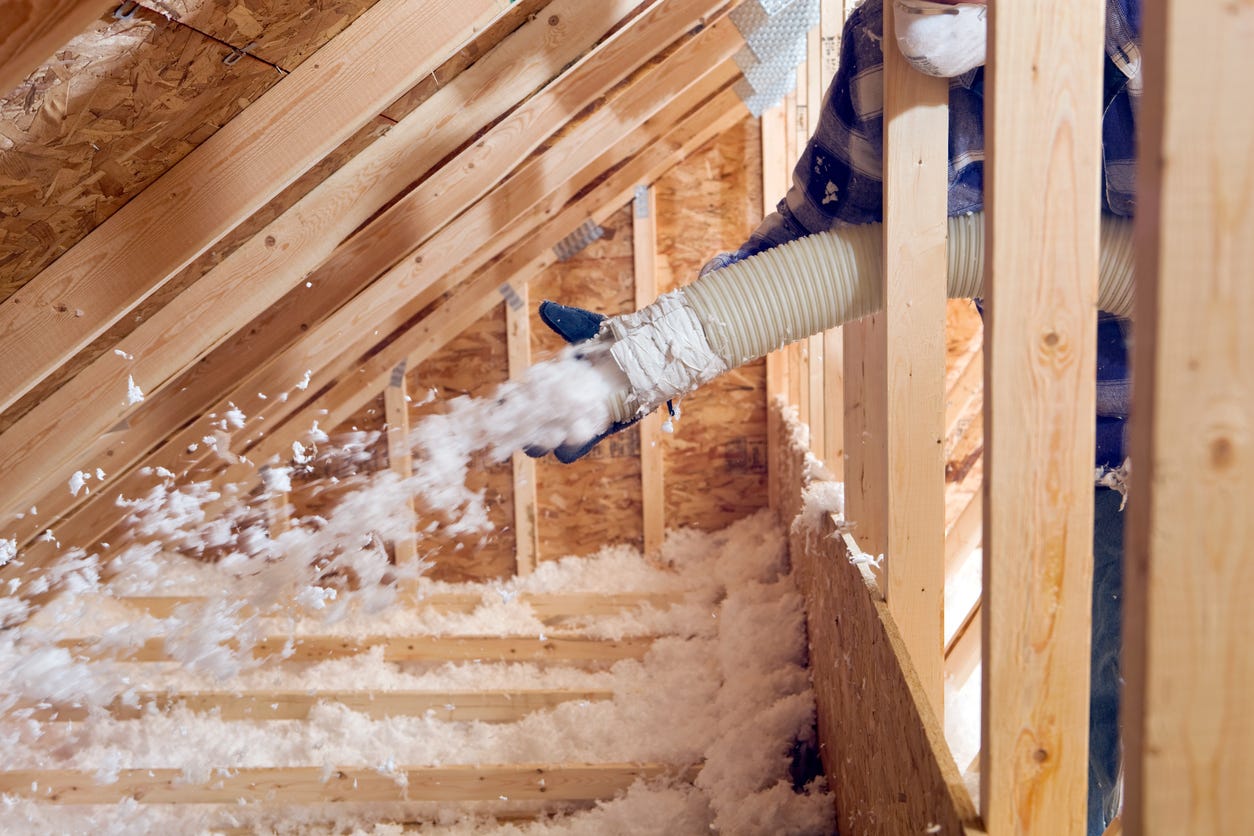
Blown-in insulation
This insulation type simply uses air pressure & a hose to fill a cavity (like a floor or wall) with loose fibers of insulation material. Thus, it works with zero-plastic construction as long as the fibers used aren’t made of plastic.
One caution about this technique: it’s probably really important to only use this in well-enclosed spaces, NOT like shown in the picture. Without an adhesive or binder, whatever material you choose will surely end up floating in the air it’s exposed to. Mineral fibers (literally iron slag or molten rock fibers) are SUPER bad to inhale, responsible for horrifying cancers like the schoolyard classic “pneumonoultramicroscopicsilicovolcanoconiosis” (maybe not really, but definitely bad news to inhale). Loose fill is best for construction applications like the inside of walls; anything exposed to the air should be bound up in a neat package.
Rigid fiber
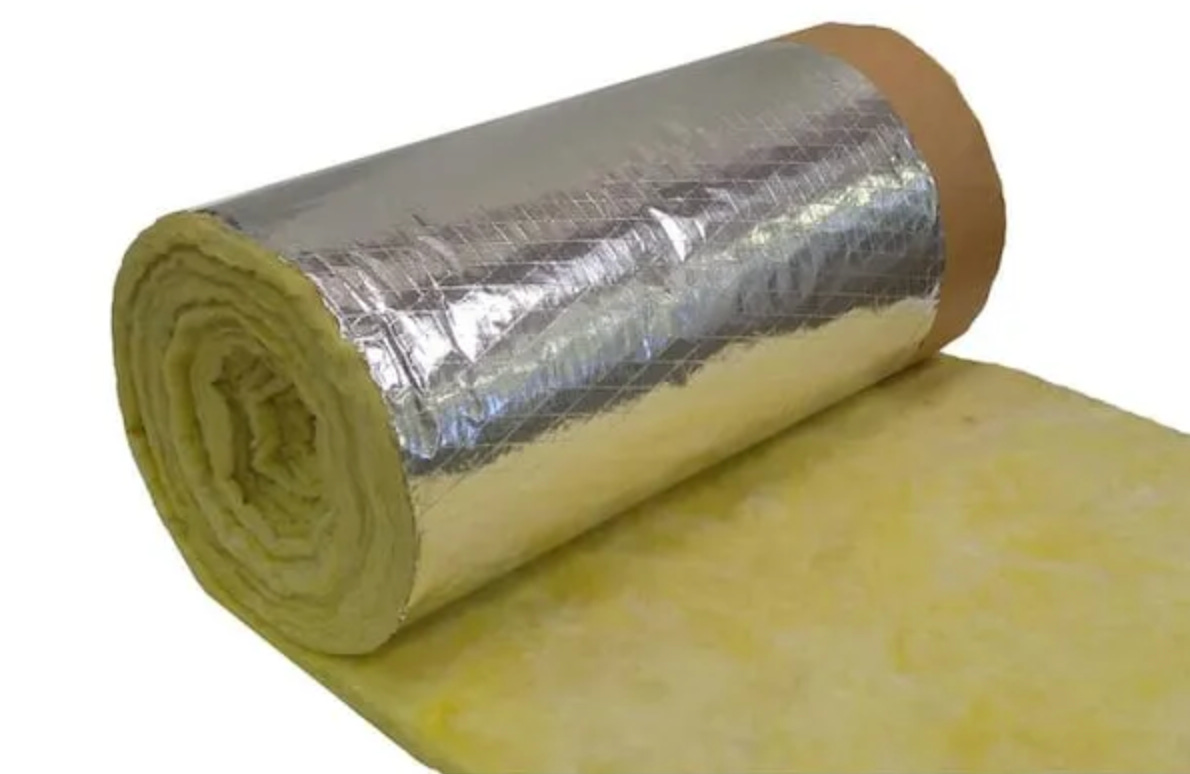
Rigid fiber insulation
Generally used around HVAC ducts. It’s usually made of plastic foil adhered to fiberglass/mineral wool fabric.
I can imagine an iteration of this product which uses only mineral wool & metal foil with some kind of mechanical bonding between them; that said nothing of the sort is available. I’d caution against using this to insulate air ducts, because the constant airflow will likely cause microplastic fallout, particularly if the duct experiences frequent temperature changes, and the ducts will carry that fallout anywhere the air system leads. That said, insulating air ducts is really important for energy efficiency, particularly in large buildings, so if anyone wants to make millions of dollars selling to forward-thinking hospitals and such, they should develop a product for this niche which measurably doesn’t pollute the air.
Spray foam
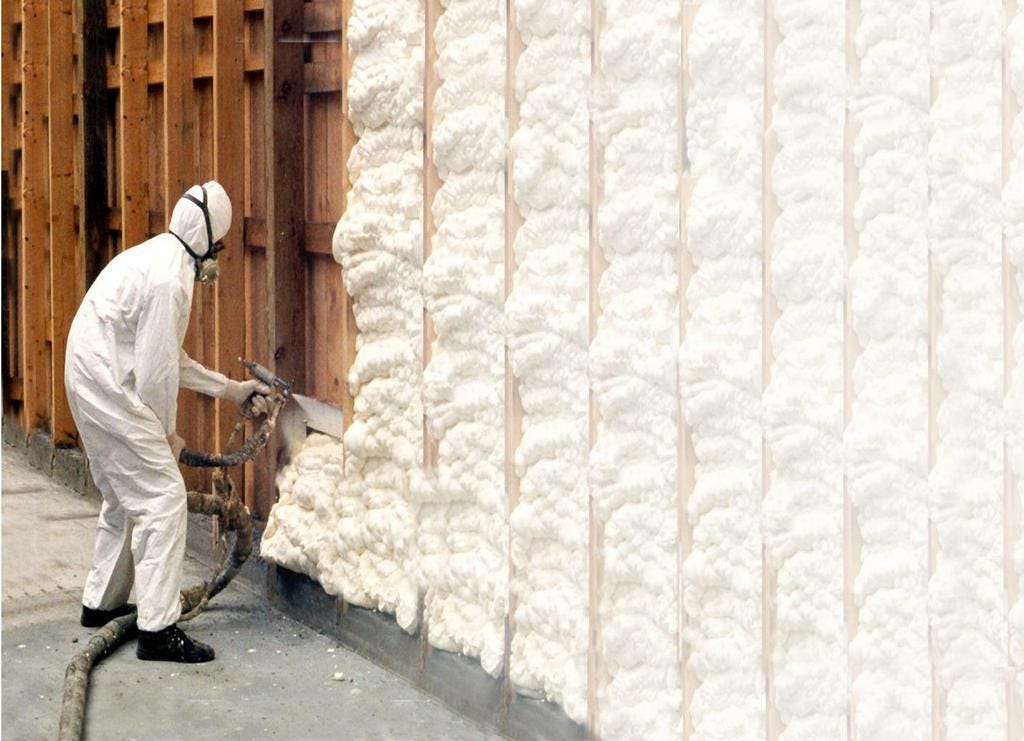
Spray foam insulation
Spray foam insulation, usually consisting of the expanding foam created when isocyanate is combined with polyol resin, is pretty much pure plastic. There does exist a type of air-hardening cement which can be sprayed in a similar fashion, called cementitious foam; that said, the actual use of this product seems minimal. I’d venture that this insulation form factor, despite its popularity, is probably a complete no-go for zero plastic construction.1
Thoughts
Insulation accounts for a massive percentage of all plastic use and production globally. Replacing the plastics we use in this sector with less polluting and less endocrine-disrupting materials will make a huge difference in health outcomes, fertility, ecological sustainability, and general quality of life in our societies.
To that end, efficiently manufacturing cellulosic insulation materials, mineral wool products without any major downsides, or as-yet-undiscovered alternative insulation products is a good life goal for someone talented and inclined to do something important. Particularly, a zero-plastic product which is cheap, easy to apply, durable, and insulating enough, could be a game-changer towards ending endocrine pollution in the modern economies, and plastic pollution globally.
My personal feeling is that mineral wool is a natural contender for replacing plastic in insulation, as its appearance, properties, and form factors are so similar already to the plastic ones, other than spray foam. However, I’m not a chemist, and maybe there exist even better, cheaper, and more convenient options. The future is bright for anyone who wants to give a few years to exploring this question, and for the rest of us if they succeed!
References
- Sustainable Building and Living, Focus on Plastics, International Sustainable Chemistry Collaborative Centre, 2020.
- Types of Insulation, U.S. Department of Energy, .