
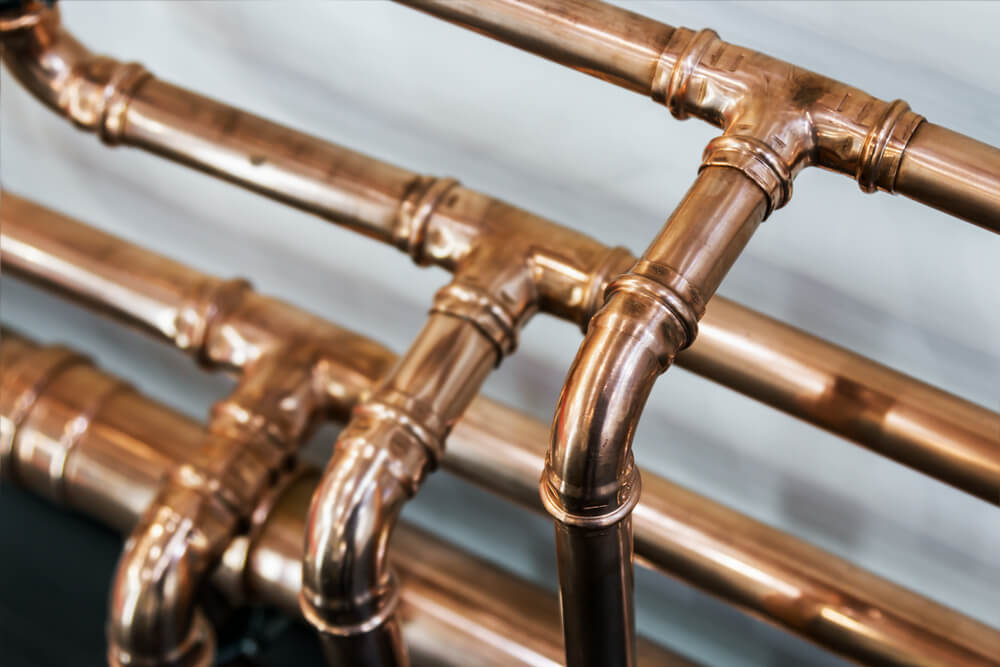
Plumbing refers to the system of pipes, fittings, and control elements that convey fluids, typically water, throughout a building. While plumbing systems vary widely by application and region, most modern residential and commercial installations in the United States make extensive use of plastic-based components. The following outlines major categories of plumbing materials, with attention to their typical composition and relevance to zero-plastic construction.
Pipes, fittings, and drainage components
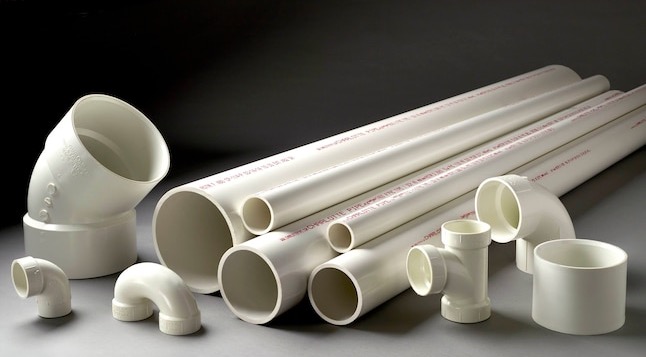
PVC pipes
Pipes and fittings are typically made from either metal (e.g. copper, steel, or cast iron) or plastic. Common plastic pipe types include polyvinyl chloride (PVC), chlorinated PVC (CPVC), cross-linked polyethylene (PEX), and acrylonitrile butadiene styrene (ABS). These are widely used due to their corrosion resistance and low cost. Some estimate that 70% of of newly installed municipal water pipes in the US are PVC. [1]
Metal pipes, while more expensive, are long-established, readily available, and appropriate for plastic-free construction. Fittings, drainage components, and vent stacks made of metal are widely compatible with these systems.
Seals and thread treatments
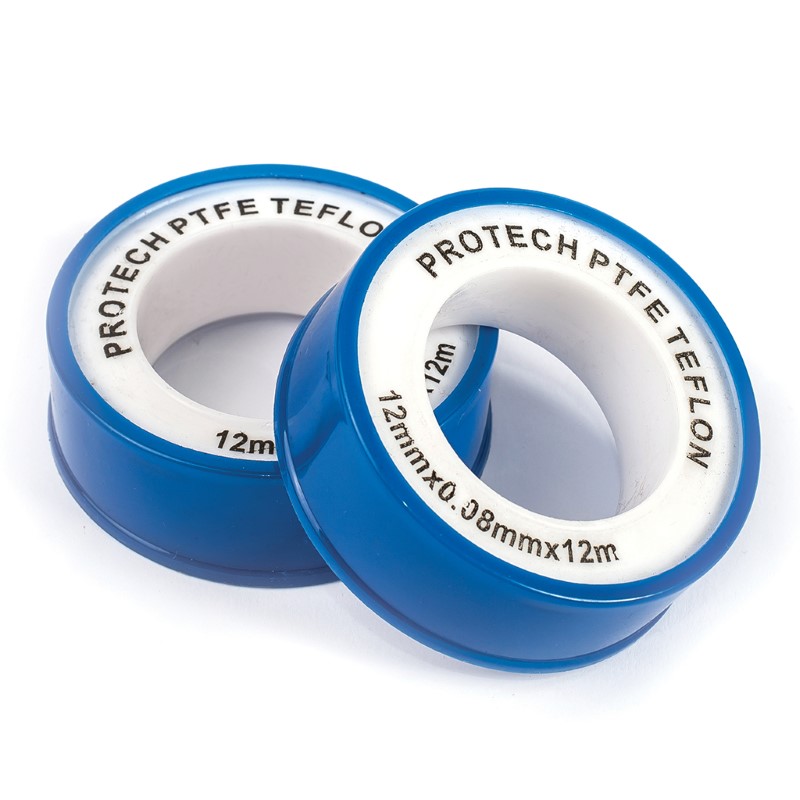
Teflon tape for sealing threads
Sealing materials in plumbing include thread sealants (pipe dope), thread tapes, PVC cements, gaskets, and O-rings:
- Pipe dope: Some formulations use natural or mineral ingredients and are plastic-free. [2] Others may include synthetic additives such as PTFE or silicone.
- Teflon tape: Made from PTFE (a PFAS compound), not suitable for plastic-free construction.
- PVC cement and primer: Designed for bonding plastic pipe; irrelevant to non-plastic systems.
- Gaskets and O-rings: Often made from elastomeric plastics. While difficult to avoid in high-performance systems, their small size and limited exposure area make them a minimal concern in most residential systems.
Valves
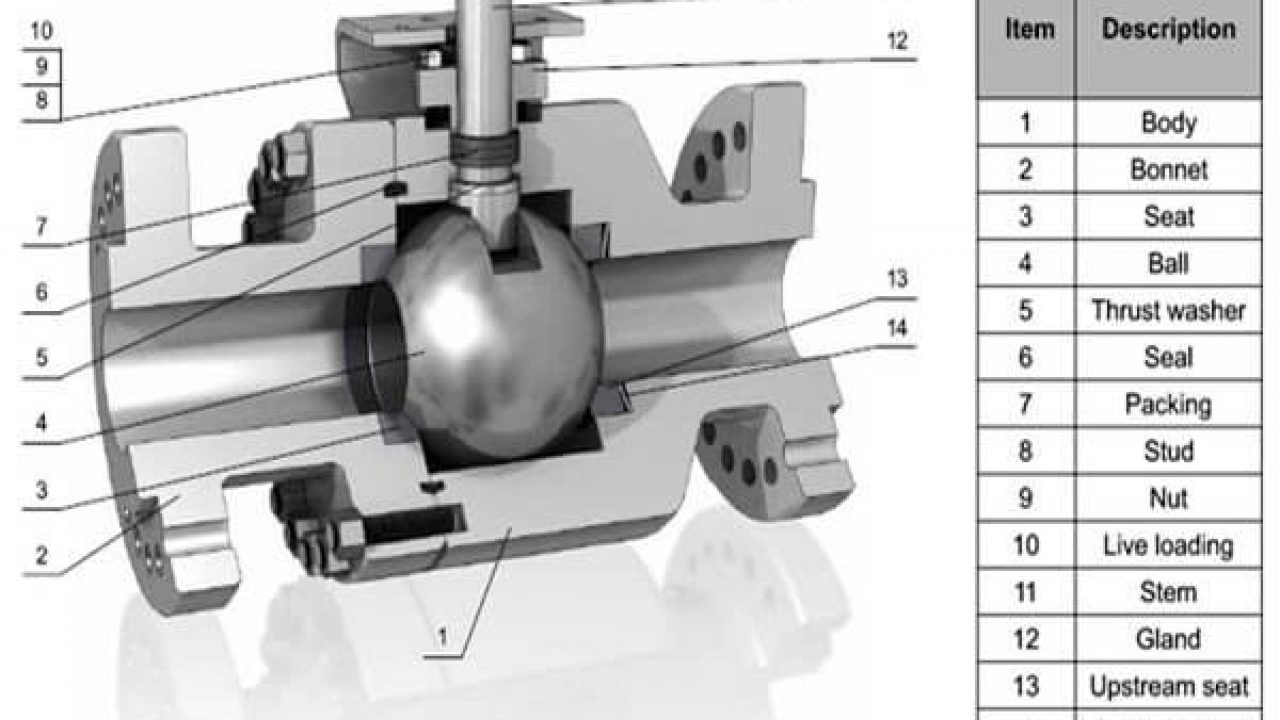
Diagram of a ball valve
Valves control fluid flow and are available in plastic or metal forms. Brass and stainless steel valves remain common and are compatible with metal plumbing systems. Plastic valves are cheaper but less durable. For zero-plastic construction, all-metal valves are both viable and widely used.
Insulation

Insulated pipes
Pipe insulation is commonly used for thermal efficiency and freeze protection. Most available insulation products are made from plastic-based foams (e.g. polyethylene, EPDM, or fiberglass with polymer binders). Alternatives such as mineral wool or textile-based sleeves are theoretically viable but not commercially widespread. This represents an area of opportunity for future product development.
Fasteners and supports
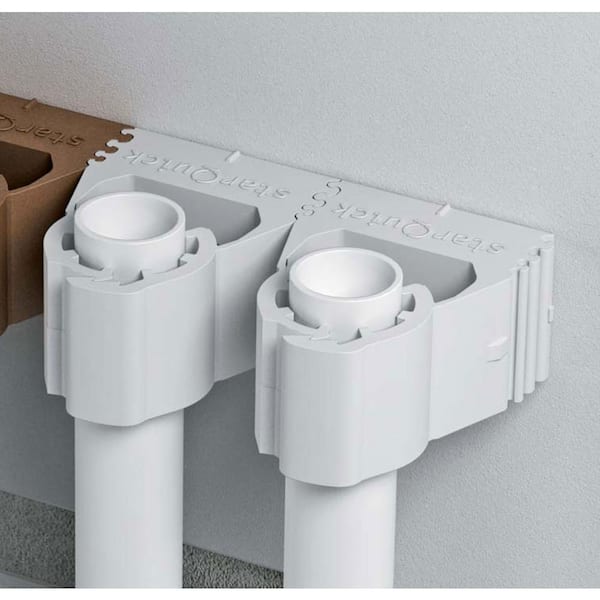
Wall mounting bracket made of PVC
Fasteners such as clamps, hangers, and brackets secure plumbing systems to structures. While plastic fasteners exist, especially in PVC systems, metal fasteners are the norm for metal piping and offer sufficient strength and durability. Plastic-free fastener systems are widely available and present no major barrier to zero-plastic construction.
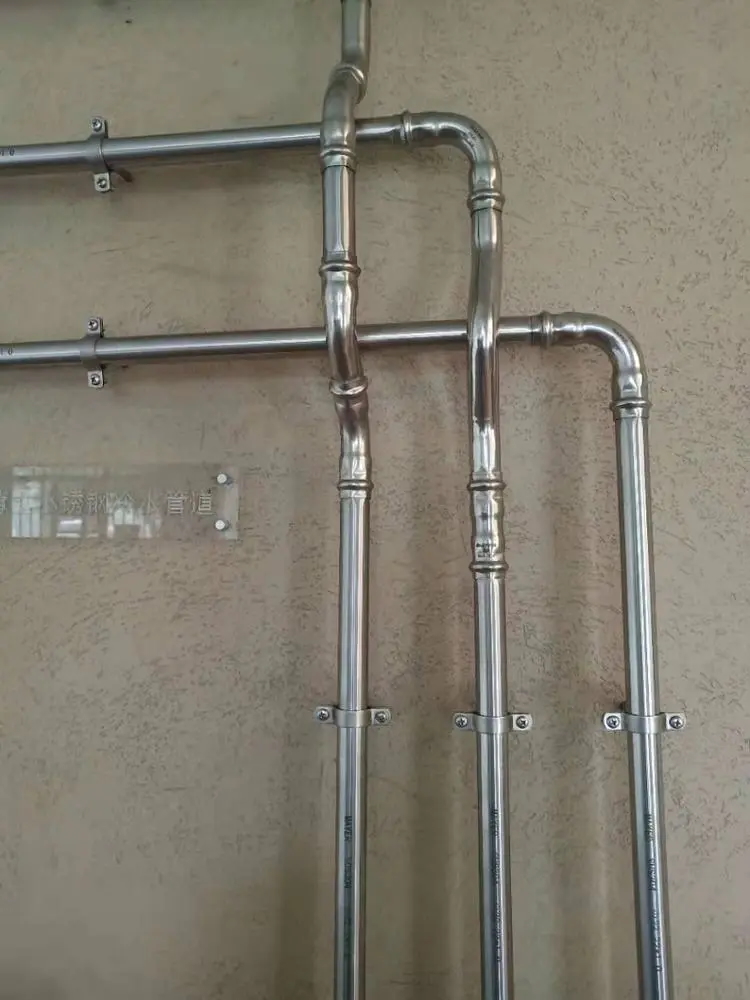
Metal pipes fastened to the wall
References
- PVC Water Pipes for Water Delivery, Vinyl Institute, 2018.
- Pipe Dope: Composition, Wikipedia, 2025.